
Cài đặt Jenkins Agent trên Proxmox VE
Step 1: Khởi tạo Container
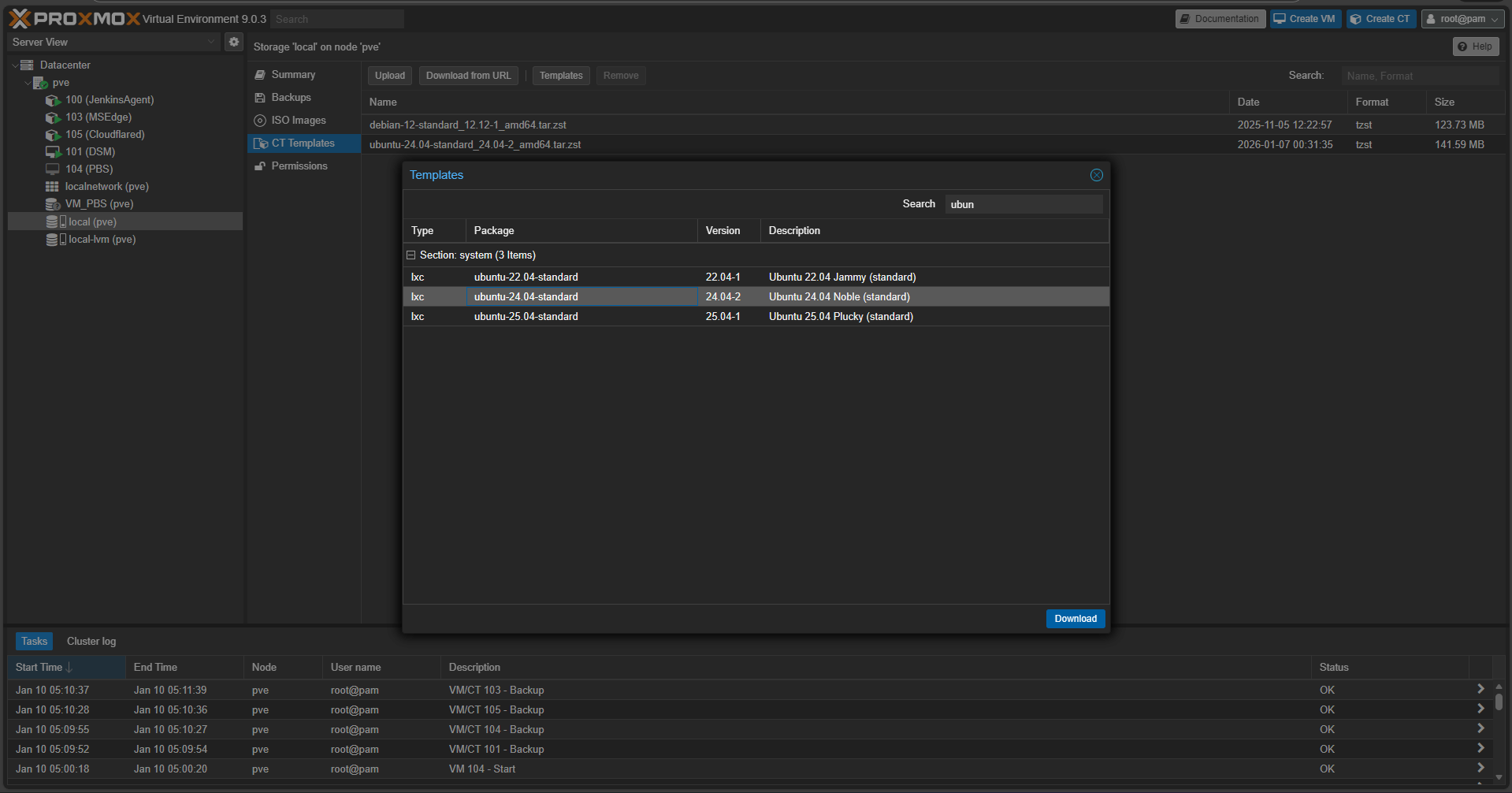
- Tải template: Trên PVE tải template Ubuntu 24.04
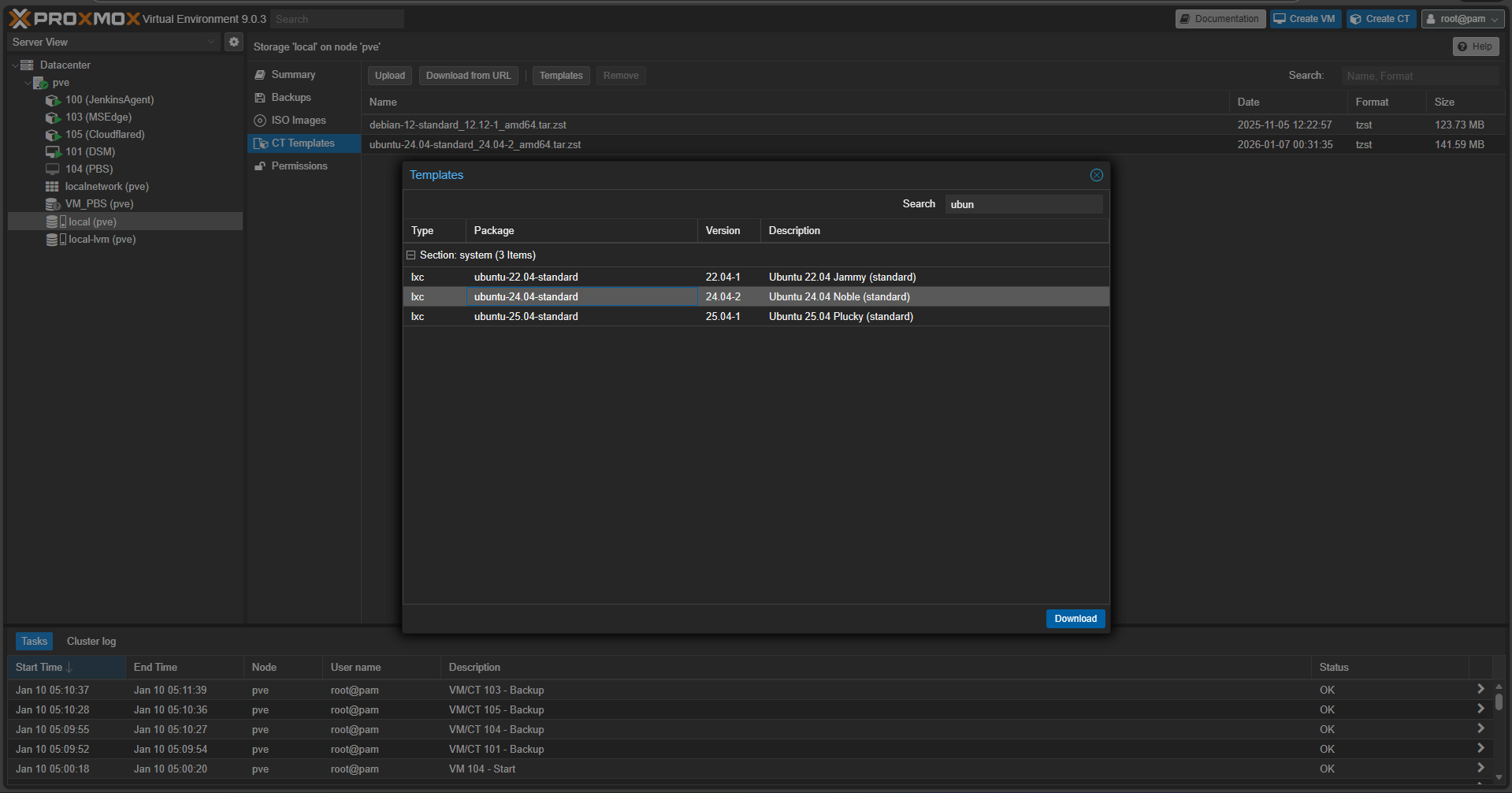
- Tại CT với template Ubuntu vừa tải về
- CPU: 2 - 4 core
- RAM: 2048 MB (Swap 512 MB)
- Disk: 16GB (có thể mở rộng thêm nếu cần)
- Network: sử dụng Static IP dạng 192.168.1.100/24 (nhớ điền Gateway 192.168.1.1)
- Ok, Create and Start container vừa tạo.
Step 2: Thiết lập môi trường cho Agent
Đăng nhập vào Agent với quyền root và mật khẩu đã tạo.
- Cài đặt các tools cần thiết:
apt update && apt upgrade -y // Update các package đã có trong hệ thống.apt install openjdk-17-jdk git curl -y // Cài đặt JDK, Git, curl
- Tạo user riêng cho jenkins
adduser jenkins // Tạo user tên là jenkins
- Tạo thư mục làm việc và cấp quyền cho
jenkinsmkdir -p /var/jenkins_home // Tạo thư mục jenkins_homechown -R jenkins:jenkins /var/jenkins_home // Cấp quyền cho user jenkins
- Chuyển SSH từ Socket sang Service (Mặc định SSH sẽ ở socket, chỉ hoạt động khi có yêu cầu. Để tránh gặp lỗi trong quá trình tự động thì nên chuyển sang Service)
systemctl stop ssh.socketsystemctl disable ssh.socketsystemctl enable ssh.servicesystemctl start ssh.service
Step 3: Thiết lập SSH Key
Tạo SSH Key để Jenkins Master có thể ra lệnh cho Agent mà không cần nhập mật khẩu mỗi khi cần build.
# Chuyển sang user jenkins
su - jenkins
# Tạo key (không đặt passphrase)
ssh-keygen -t rsa -b 4096 -f ~/.ssh/id_rsa

# Tự cấp quyền cho chính mình (Authorized Keys)
cd ~/.ssh
cat id_rsa.pub >> authorized_keys
chmod 700 ~/.ssh
chmod 600 ~/.ssh/authorized_keys

# Hiển thị Private Key để copy vào Jenkins Master
cat id_rsa
Step 4: Tạo Node mới trên Jenkins Master
- Tạo Credentials mới loại SSH Username with private key với Private Key vừa lấy ở bước trên.
- Chú ý domain là global
- Tạo Node. Jenkins Master > Manage Jenkins > Node > New Node
- Remote root directory:
/var/jenkins_home(thư mục làm việc đã tạo ở trên) - Label: label bất kỳ để dùng trong jenkinsfile.
- Host: IP của Agent đã tạo ở Bước 1.
- Host Key Verification Strategy: Chọn "Non-verifying Verification Strategy".
- Remote root directory:
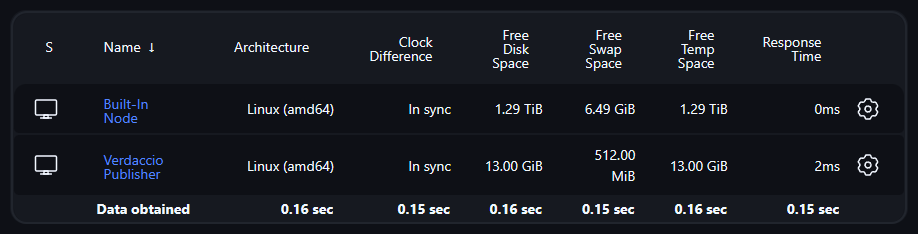
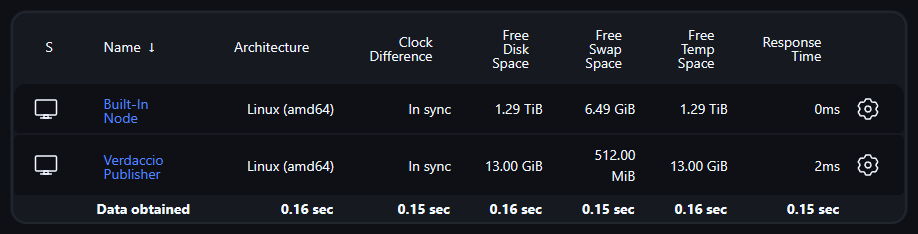
- Ok tạo Node. Nếu có respond như hình thì tức là đã tạo và kết nối thành công. Nếu không thì kiểm tra log để biết vấn đề.
Step 5: Update Jenkinsfile
- Thay đổi chính so với Agent Windows:
bat>shdel /F /Q>rm -f
def packageVersionFromFile = ""
def packageName = ""
def verdaccioPackageUrl = ""

pipeline {
    // Agent with Node.js & Git required
    agent { label "verdaccio-publisher" }

    // Ensure Node.js tool is available (configure in Jenkins Global Tool Config)
    tools {
        nodejs "NodeJS22"
    }

    environment {
        // Path to the directory containing package.json
        PROJECT_PATH = "Assets/Packages/DeviceDebugger"

        // Verdaccio registry URL
        VERDACCIO_REGISTRY_URL = "https://upm.thanhdv.com"
        // Jenkins Credential ID for Verdaccio auth (e.g., Secret Text or User/Pass with token)
        VERDACCIO_CREDENTIAL_ID = "THANHDV_VERDACCIO_AUTH"

        // Jenkins Credential ID for Git auth (MUST be "Username with password" type)
        // Username: your git username
        // Password: your git access token
        GIT_CREDENTIAL_ID = "THANHDV_GITHUB_JENKINS_CREDENTIAL"

        // Discord webhook create on Discord and add to Jenkins credential
        DISCORD_WEBHOOK = "DISCORD_VERDACCIO_WEBHOOK"

        // Release if commit has this key
        RELEASE_KEYWORD = "Release v"
    }
    // === End Configuration ===

    // Pipeline options
    options {
        timestamps()
        buildDiscarder(logRotator(numToKeepStr: "10"))
        timeout(time: 30, unit: "MINUTES")
        disableConcurrentBuilds()
    }

    stages {
        stage("Checkout") {
            steps {
                // Get source code
                checkout scm
                // git lfs pull // Uncomment if using Git LFS
            }
        }

        // stage("Validate Commit Message") {
        //     steps {
        //         dir(env.PROJECT_PATH) {
        //             script {
        //                 def isManualTrigger = false
        //                 currentBuild.getBuildCauses().each{ cause ->
        //                     if (cause instanceof hudson.model.Cause$UserIdCause || cause.shortDescription.contains("Started by user ")) {
        //                         isManualTrigger = true
        //                     }
        //                 }

        //                 if (isManualTrigger) {
        //                     echo "Build triggered by User! Ignore Validate Commit Message."
        //                 } else {
        //                     def commitMessage = sh(script: 'git log -1 --pretty=%%B', returnStdout: true).trim()
        //                     echo "Checking commit message: ${commitMessage}"
        //                     if (!commitMessage.contains(RELEASE_KEYWORD)) {
        //                         echo "Build condition not met! Aborting pipeline..."
        //                         currentBuild.result = 'ABORTED'
        //                         return
        //                     }
        //                 }

        //                 echo "Commit message is valid for release."
        //             }
        //         }
        //     }
        // }

        stage("Prepare") {
            when {
                expression { return currentBuild.result != "ABORTED" }
            }

            steps {
                // Operate within the project directory
                dir(env.PROJECT_PATH) {
                    script {
                        // Read version directly from package.json
                        def pkg = readJSON file: "package.json" // Assumes package.json is at PROJECT_PATH root
                        if (!pkg || !pkg.version || !pkg.name) {
                             error "Could not read version from package.json"
                        }

                        // Store the version in the script-level variable
                        packageVersionFromFile = pkg.version
                        echo "Package version: ${packageVersionFromFile}"

                        packageName = pkg.name
                        echo "Package name: ${packageName}"

                        verdaccioPackageUrl = "${env.VERDACCIO_REGISTRY_URL}/-/web/detail/${packageName}"
                        echo "Package URL: ${verdaccioPackageUrl}"

                        if (!packageVersionFromFile || !packageName || !verdaccioPackageUrl) {
                             error "Failed to set variable."
                        }

                        withCredentials([usernamePassword(credentialsId: env.VERDACCIO_CREDENTIAL_ID, usernameVariable: "NPM_USER", passwordVariable: "NPM_PASS")]) {
                            echo "Configuring npm for Verdaccio using Username/Password..."
                            // Encrypt username:password to Base64
                            def userPass = "${NPM_USER}:${NPM_PASS}"
                            def encodedAuth = java.util.Base64.getEncoder().encodeToString(userPass.getBytes("UTF-8"))

                            def registryUri = new URI(env.VERDACCIO_REGISTRY_URL)
                            def registryAuthority = registryUri.getAuthority()
                            def registryHostPath = "//${registryAuthority}/"

                            // Configure .npmrc for Verdaccio registry & auth token
                            sh "echo ${registryHostPath}:_auth=\"${encodedAuth}\" > .npmrc"
                            sh "echo registry=${env.VERDACCIO_REGISTRY_URL} >> .npmrc"
                            echo ".npmrc configured."
                        }

                        // Install dependencies (might run prepublish scripts)
                        echo "Running npm install..."
                        sh "npm install"
                    }
                }
            }
        }

        stage("Publish") {
            when {
                expression { return currentBuild.result != "ABORTED" }
            }

            steps {
                // Operate within the project directory
                dir(env.PROJECT_PATH) {
                    script {
                        // Use the version read from package.json
                        echo "Publishing package version ${packageVersionFromFile} to ${env.VERDACCIO_REGISTRY_URL}"
                        try {
                            // Publish using npm (reads package.json for name/version, uses .npmrc for auth/registry)
                            sh "npm publish --registry ${env.VERDACCIO_REGISTRY_URL}"
                            echo "Package version ${packageVersionFromFile} published successfully!"
                        } catch (err) {
                            echo "ERROR: Failed to publish package!"
                            error "Publish failed: ${err.getMessage()}"
                        }
                    }
                }
            }
        }

        // // (Optional) Tag commit with the existing version from package.json
        // stage("Tag Existing Version") {
        //     // Only run on overall success so far
        //     when { expression { currentBuild.result == null || currentBuild.result == "SUCCESS" } }
        //     steps {
        //         // Operate within the project directory
        //         dir(env.PROJECT_PATH) {
        //             script {
        //                  echo "Tagging commit with existing version v${packageVersionFromFile}..."

        //                  // Inject Git credentials (Username = Git user, Password = Access Token)
        //                 withCredentials([usernamePassword(credentialsId: env.GIT_CREDENTIAL_ID, usernameVariable: "GIT_USERNAME", passwordVariable: "GIT_ACCESS_TOKEN")]) {

        //                     // Configure Git user (may not be needed if just tagging)
        //                     sh "git config user.email \"vanthanh1998@gmail.com\"" // EDIT Or use a specific user
        //                     sh "git config user.name \"ThanhDVs Jenkins\""

        //                     // NO commit needed here as we didn"t change package.json version via npm version

        //                     // Create annotated tag using the version from package.json
        //                     sh "git tag -a v${packageVersionFromFile} -m \"Release v${packageVersionFromFile}\"" // Use the read version

        //                     // Push tag using HTTPS URL with embedded token
        //                     def repoUrl = scm.userRemoteConfigs[0].url
        //                     if (!repoUrl || !repoUrl.startsWith("https://")) {
        //                         error "Could not determine HTTPS repository URL from SCM configuration."
        //                     }
        //                     def repoUrlClean = repoUrl.replaceAll(/https?:\/\/[^\/]+@/, "https://")
        //                     def pushUrl = repoUrlClean.replaceFirst("https://", "https://${GIT_USERNAME}:${GIT_ACCESS_TOKEN}@")

        //                     // Push only the tag
        //                     sh "git push ${pushUrl} refs/tags/v${packageVersionFromFile}:refs/tags/v${packageVersionFromFile}"

        //                     echo "Version tag v${packageVersionFromFile} pushed successfully."
        //                 }
        //             }
        //         }
        //     }
        // }
    }

    // Post-build actions
    post {
        // Always run cleanup
        always {
            echo "Build finished. Cleaning up..."
            // Clean up sensitive .npmrc file
            dir(env.PROJECT_PATH) {
                script {
                    try {
                        sh "rm -f .npmrc"
                    } catch (err) {
                        echo "Could not delete .npmrc (maybe it doesn't exist): ${err.getMessage()}"
                    }
                }
            }
        }

        // On success
        success {
            echo "Pipeline successful!"

            // Save artifacts if need
            // archiveArtifacts artifacts: '**/*.tgz', allowEmptyArchive: true

            echo "Cleaning up workspace..."
            deleteDir()

            echo "Sending success notification to Discord..."
            script {
                // Send
                withCredentials([string(credentialsId: "${env.DISCORD_WEBHOOK}", variable: 'DISCORD_WEBHOOK_URL_SECRET')]) {
                    discordSend(
                        webhookURL: DISCORD_WEBHOOK_URL_SECRET,
                        title: "✅ Success: ${env.JOB_NAME}",
                        description: "Job `${env.JOB_NAME}` build #${env.BUILD_NUMBER} published package `${packageName}@${packageVersionFromFile}` successfully.\nBuild Log: ${env.BUILD_URL}.\nPackage URL: ${verdaccioPackageUrl}",
                        result: "SUCCESS",
                        link: env.BUILD_URL,
                        footer: "Jenkins Build Notification"
                    )
                }
            }
        }

        // On failure
        failure {
            echo "Pipeline failed!"

            echo "Sending failure notification to Discord..."
            script {
                // Send
                withCredentials([string(credentialsId: "${env.DISCORD_WEBHOOK}", variable: 'DISCORD_WEBHOOK_URL_SECRET')]) {
                    discordSend(
                        webhookURL: DISCORD_WEBHOOK_URL_SECRET,
                        title: "❌ Failure: ${env.JOB_NAME}",
                        description: "Job `${env.JOB_NAME}` build #${env.BUILD_NUMBER} failed to publish package `${packageName}`.\nBuild Log: ${env.BUILD_URL}",
                        result: "FAILURE",
                        link: env.BUILD_URL,
                        footer: "Jenkins Build Notification"
                    )
                }
            }
        }

        aborted {
            echo "Pipeline aborted!"
            echo "Sending abort notification to Discord..."
            script {
                // Send
                withCredentials([string(credentialsId: "${env.DISCORD_WEBHOOK}", variable: 'DISCORD_WEBHOOK_URL_SECRET')]) {
                    discordSend(
                        webhookURL: DISCORD_WEBHOOK_URL_SECRET,
                        title: "ℹ️ Aborted: ${env.JOB_NAME}",
                        description: "Build #${env.BUILD_NUMBER} for job `${env.JOB_NAME}` was aborted.",
                        result: "ABORTED",
                        link: env.BUILD_URL,
                        footer: "Jenkins Build Notification"
                    )
                }
            }
        }

        unstable {
            echo "Pipeline unstable!"

            echo "Sending unstable notification to Discord..."
            script {
                withCredentials([string(credentialsId: "${env.DISCORD_WEBHOOK}", variable: 'DISCORD_WEBHOOK_URL_SECRET')]) {
                    discordSend(
                        webhookURL: DISCORD_WEBHOOK_URL_SECRET,
                        title: "⚠️ Unstable: ${env.JOB_NAME}",
                        description: "Job `${env.JOB_NAME}` build #${env.BUILD_NUMBER} finished with unstable status during processing of package `${packageName}`.\nBuild Log: ${env.BUILD_URL}",
                        result: "UNSTABLE",
                        link: env.BUILD_URL,
                        footer: "Jenkins Build Notification"
                    )
                }
            }
        }
    }
}